Runny nose. Itchy eyes. Sneezing every time you sit on the couch. If you’re managing allergies or asthma at home, your carpet could be part of the problem — even if it looks perfectly clean. Here’s what’s actually going on, and what you can do to make your home easier to breathe in.
What’s Actually Living in Your Carpet
Carpets are brilliant at trapping things. Dust mites, pet dander, pollen, mould spores — all of it settles into carpet fibres and builds up over time.
The sneaky part? Most of it’s invisible. Your carpet can look fine and still be loaded with allergens that get disturbed every time someone walks through the room.
Common carpet allergens include:
- Dust mite waste (a major asthma and allergy trigger)
- Pet dander — skin flakes from cats, dogs and other animals
- Pollen tracked in from outside
- Mould spores, especially in damp or humid rooms
- Dead skin cells from people and animals
Why Vacuuming Isn’t Enough
Regular vacuuming definitely helps, but it only removes surface-level debris. Standard vacuum cleaners don’t reach deep into carpet pile where allergens settle and stick.
Without a deeper clean, allergens keep building up below the surface. Every footstep and draught disturbs them back into the air — right where you’re breathing.
The Britex Asthma and Allergy Connection
This is worth knowing: the Britex 3in1 Deep Cleaning Machine and Britex Everyday and Cleaning Solutions ranges are all endorsed by the National Asthma Council of Australia’s Sensitive Choice® program. Products carrying the Sensitive Choice butterfly logo have been assessed as potentially better choices for people with asthma or allergies.
All Britex products are also family and pet safe, which matters a lot when you’re trying to reduce irritants rather than add new ones.
What Actually Helps: A Practical Approach
1. Vacuum More Often — and Vacuum Better
For allergy households, vacuuming high-traffic areas two to three times a week (rather than once) makes a real difference. Use a vacuum with a HEPA filter if possible, as it traps fine particles rather than blowing them back out.
2. Don’t Forget the Furniture
Couches and fabric chairs are just as guilty as carpets. Pet dander and dust mites accumulate in upholstery too. Vacuum cushions and armrests regularly, and treat any spills or accidents promptly with something like the Britex Everyday Range before they soak in.
3. Deep Clean Carpets at Least Twice a Year
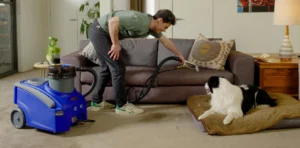
Surface vacuuming won’t shift what’s embedded deep in the pile. A hot water extraction clean — the kind done by the Britex 3in1 Deep Cleaning Machine — reaches deep into carpet fibres and extracts the dirt, dander and residue that’s built up over months.
For allergy households, twice a year is the minimum. If you have pets or someone in the house with asthma, consider doing it every 3–6 months.
4. Sort Out Humidity
Dust mites thrive in humidity above 50%. If your home tends to feel damp, improving ventilation, using a dehumidifier or running the air con can reduce mite populations over time.
5. Let Carpet Dry Completely After Cleaning
Damp carpet is a mould risk. Always make sure there’s good airflow after a deep clean. The Britex 3in1 machine’s powerful suction extracts most of the moisture, leaving carpets dry in around four hours.
When to Deep Clean (Allergy-Focused Timeline)
- Every week: Vacuum high-traffic areas and upholstery
- After pets sleep in new areas or spend extra time indoors
- After winter, before spring pollen season kicks in
- Every 3–6 months: Full deep clean of carpets and upholstery
- After anyone in the household has a respiratory illness
FAQs: Carpet Cleaning and Allergies
Can carpet cleaning help with allergies?
Yes. Deep cleaning removes the allergens that have built up below the surface — dust mites, pet dander, pollen and mould spores that regular vacuuming leaves behind.
How often should allergy sufferers clean their carpets?
At minimum twice a year. Homes with pets or people with asthma benefit from deep cleaning every 3–6 months.
Are Britex products safe for people with asthma?
Yes. Britex products are endorsed by the National Asthma Council of Australia’s Sensitive Choice® program and are family and pet safe.
Does vacuuming help with dust mites?
It removes surface allergens but doesn’t reach the deep pile where dust mites live. Hot water extraction cleaning is much more effective at eliminating them.
If your allergies seem worse at home, your carpets are worth looking at. Regular vacuuming is a start, but it’s the deeper clean that actually shifts what’s triggering your symptoms. Done a couple of times a year, it’s one of the most practical things you can do to improve air quality without changing your whole home. Your nose will thank you.